Expert Advice. The Best Mortgage Solutions.

Helping You Build Wealth Through Real Estate.

SCHEDULE A CALL

WELCOME TO SYNERGY MORTGAGE GROUP

Whether it is purchasing a home, a rental, vacation property or consolidating debt,

my goal is to provide you with the best possible solution tailored to your specific needs.

JOSH PEREZ

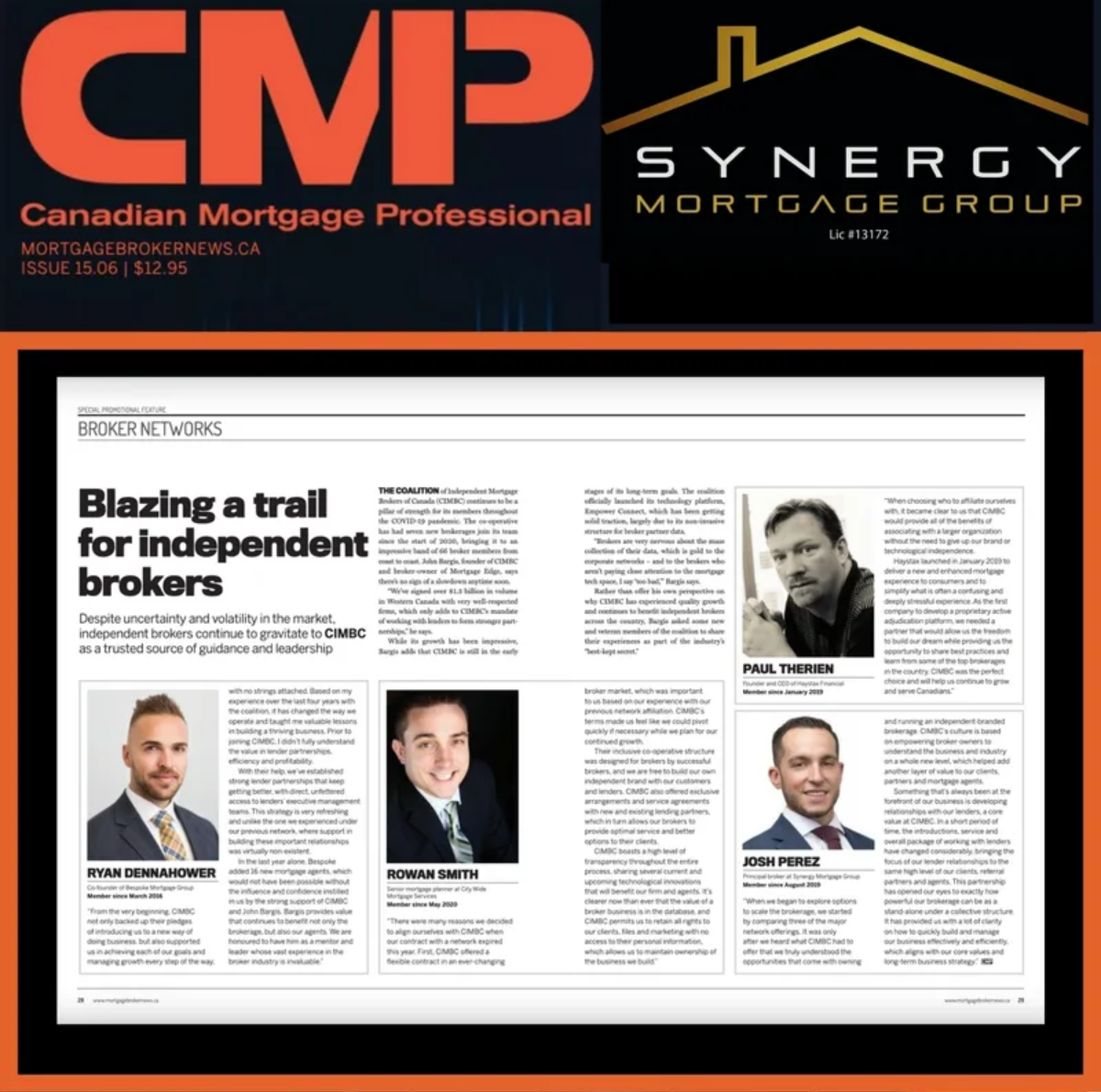
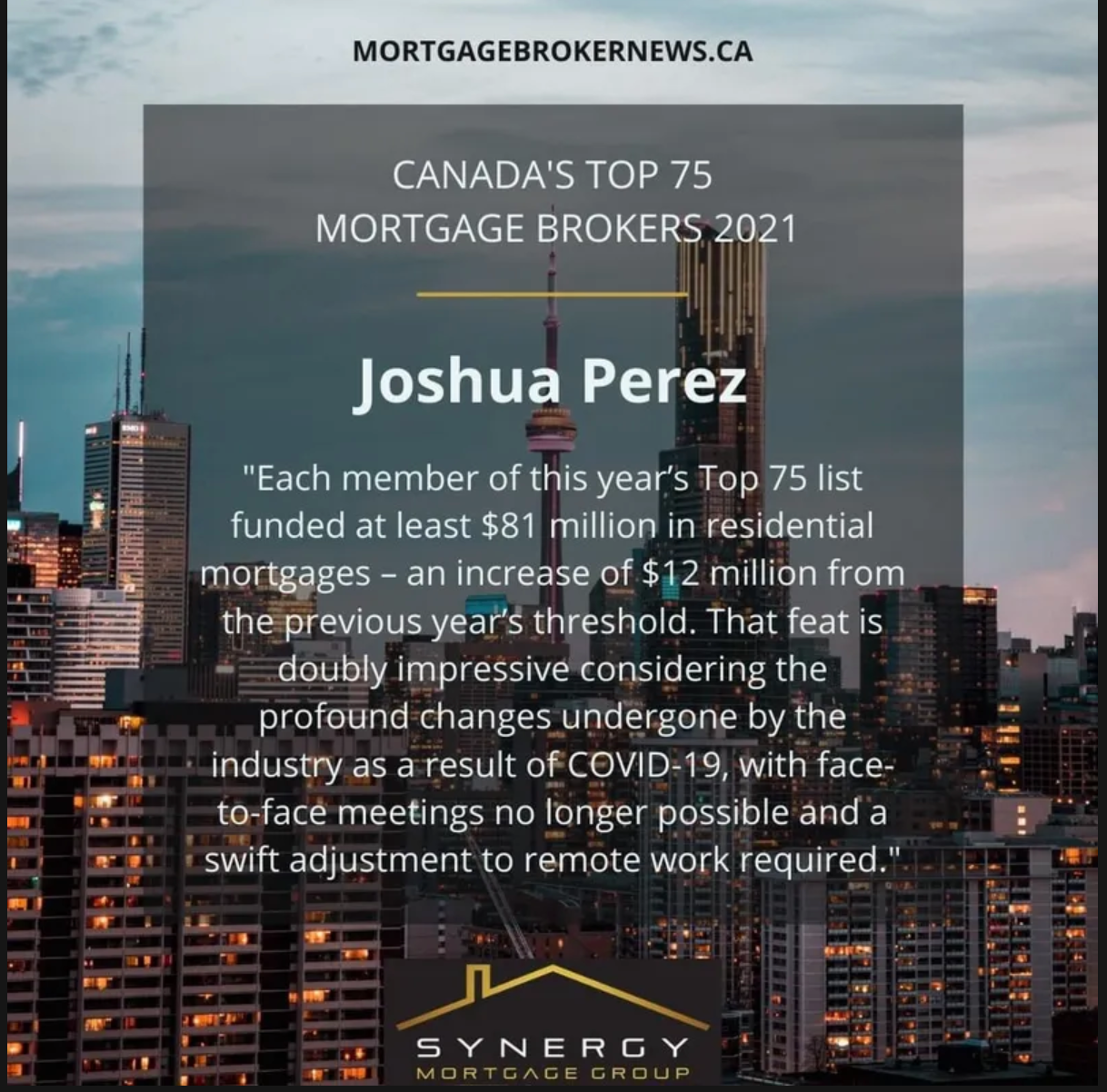
Josh Perez is the Principal Broker and Partner at Synergy Mortgage Group. He started working at a big bank in 2009 becoming a Financial Advisor before transitioning to a Mortgage Broker in 2015. He's been recognized in Canadian Mortgage Professional's Top 75 Brokers in Canada in each of the last 3 years. His brokerage, Synergy Mortgage Group, which officially launched in 2020, was nominated for Top New Mortgage Brokerage of the Year and has funded over a billion in mortgage volume in the last two years. Josh with his team at Synergy and access to 60+ lender partners, is committed to providing expert advice and the best mortgage solutions.


Josh is also actively involved in real estate investing and presently owns 150+ doors spanning residential and commercial property, mainly in Ontario with a few active projects in Southwest Florida and Alberta. He started his investing journey in 2010 and is a big advocate of helping his clients, partners and inner circle build wealth through real estate and educating them on how it can help them accelerate reaching their financial goals.

Nice things people have said about working with me.

Videos To Keep You Informed

Get started by scheduling a

5 - 10 minute intro call

BOOK A CALL

I'll let you know exactly where you stand so you can proceed with confidence.
Awards


Learn More About:

Mortgages, Home Ownership, And Real Estate Investing

YOUTUBE CHANNEL

Go ahead and schedule a meeting with me!

Services

  • Mortgage Solutions

    First-Time Home Buyers

    Rentals

    Commercial Properties

    Consumer Proposals

    Cashback

    Purchase+Improvements

    New Builds

  • Private Lending & Refinancing

    Renovations

    Debt Consolodation

    Investing

    Home Equity Line of Credit

    Down Payment Towards Another Purchase

    Short-Term Loan/Temporary Situations

    First and Second Mortgages

New Paragraph

Mortgage articles to keep you informed

By Josh Perez April 8, 2026
Thinking of Calling Your Bank for a Mortgage? Read This First. If you're buying a home or renewing your mortgage, your first instinct might be to call your bank. It's familiar. It's easy. But it might also cost you more than you realize—in money, flexibility, and long-term satisfaction. Before you sign anything, here are four things your bank won’t tell you—and four reasons why working with an independent mortgage professional is the smarter move. 1. Your Bank Offers Limited Mortgage Options Banks can only offer what they sell. So if your financial situation doesn’t fit neatly into their guidelines—or if you’re looking for competitive terms—you might be out of luck. Working with a mortgage broker? You get access to mortgage products from hundreds of lenders : major banks, credit unions, monoline lenders, alternative lenders, B lenders, and even private funds. That means more options, more flexibility, and a much better chance of finding a mortgage that fits you. 2. Bank Reps Are Salespeople—Not Mortgage Strategists Let’s be honest: most bank mortgage reps are trained to sell their employer’s products—not to analyze your financial goals or tailor a long-term mortgage plan. Their job is to generate revenue for the bank. Independent mortgage professionals are different. We’re not tied to one lender—we’re tied to you. Our job is to shop around, negotiate on your behalf, and recommend the mortgage that offers the best balance of rate, terms, and flexibility. And yes, we get paid by the lender—but only after we find you a mortgage that works for your situation. That creates a win-win-win: you get the best deal, we earn our fee, and the lender earns your business. 3. Banks Don’t Lead with Their Best Rate It’s true. Banks often reserve their best rates for those who ask for them—or threaten to walk. And guess what? Most people don’t. Over 50% of Canadians accept the first renewal offer they get by mail. No questions asked. That’s exactly what the banks count on. Mortgage professionals don’t play that game. We start by finding lenders offering competitive rates upfront, and we handle the negotiations for you. There’s no guesswork, no pressure, and no settling for less than you deserve. 4. Bank Mortgages Are Often More Restrictive Than You Think Not all mortgages are created equal. Some come with hidden traps—especially around penalties. Ever heard of a sky-high prepayment charge when someone breaks their mortgage early? That’s often due to something called an Interest Rate Differential (IRD) —and big banks are notorious for using the harshest IRD calculations. When we help you choose a mortgage, we don’t just focus on the interest rate. We look at the whole picture, including: Prepayment privileges Penalty calculations Portability Future flexibility That way, if your life changes, your mortgage won’t become a financial anchor. A Quick Recap What your bank typically offers: Only their own limited mortgage products Sales-focused representatives, not mortgage strategists Default rates that aren’t usually their best Restrictive contracts with high penalties What an independent mortgage professional delivers: Access to over 200 lenders and customized mortgage solutions Personalized advice and long-term financial strategy Competitive rates and terms upfront Transparent, flexible mortgage options designed around your needs Let’s Talk Before You Sign Your mortgage is likely the biggest financial commitment you’ll ever make. So why settle for a one-size-fits-all solution? If you're buying, refinancing, or renewing, I’d love to help you explore your options, explain the fine print, and find a mortgage that truly works for you. Let’s start with a conversation—no pressure, just good advice.
By Josh Perez April 3, 2026
Watch the video that inspired this post: Waiting for the perfect time to buy is why most people stay stuck. The Trap That Keeps Buyers on the Sidelines Ask most people why they haven't bought a home yet and you'll hear some version of the same answer: "I'm waiting for the right time." They're watching interest rates. They're tracking home prices. They're waiting for a signal — some clear, unmistakable sign that now is the moment to move. Here's the truth: that signal never comes. Not in the way most people imagine it. The market doesn't send you a notification. There's no headline that reads "Perfect time to buy — act now." And the longer you wait for certainty, the more time passes, the more equity you don't build, and the more rent you pay into someone else's mortgage. Waiting for the perfect time to buy is exactly why most people stay stuck. Why You Can't Time the Market — And Don't Need To Nobody nails the timing. Not investors. Not economists. Not the people who've been watching the market for twenty years. The idea that there's a precise moment when everything aligns perfectly is a myth — and chasing it is one of the most expensive mistakes a buyer can make. What you can do is follow a framework that removes the guesswork. Instead of trying to predict the market, you assess your own situation against three concrete pillars. When all three are in place, the timing question answers itself. The Three-Pillar Framework Pillar 1: Affordability Not what you hope you can stretch into. Not the maximum amount a lender will approve you for. The real, honest monthly payment you can handle without financial stress — with room left over for life. A lot of buyers make the mistake of working backwards from the maximum approval number. That's how you end up house-poor: technically a homeowner, but unable to enjoy any of it because every dollar goes to the mortgage. True affordability means the payment fits your life, not the other way around. Before you start looking at properties, get clear on your number. What monthly payment leaves you comfortable? That's your ceiling — not what the bank says you can borrow. Pillar 2: Stability A mortgage is a long-term commitment. Lenders know this, which is why they scrutinize your employment history and income so closely. But stability isn't just about satisfying a lender — it's about protecting yourself. If your job is secure, your income is consistent, and your financial life isn't in a period of major upheaval, your window is already open. You don't need to be rich. You don't need a perfect credit score. You need a stable foundation that a mortgage can be built on. If your situation is genuinely uncertain — a career change in progress, a major life transition underway — it may make sense to wait until things settle. But if you're stable and simply feeling uncertain because the market feels uncertain, that's a different problem entirely. Pillar 3: Market Fundamentals You don't need to predict where prices are going. You don't need to call the top or the bottom. What you need to assess is whether the market you're buying in has steady demand and whether the carrying costs make sense relative to what you'd pay to rent. In most Ontario markets, the fundamentals have remained strong over the long term. Population growth, limited housing supply, and consistent demand have historically supported property values. That doesn't mean every property in every neighbourhood is a smart buy — but it does mean that a well-chosen purchase in a stable market tends to reward patient owners. When All Three Line Up, Buy This is the framework. It's not complicated, but it is disciplined. When affordability is in place, your situation is stable, and the market fundamentals support a purchase — stop waiting. The timing question has answered itself. Every month you delay in a stable market is a month of appreciation you miss, a month of equity you don't build, and a month of rent that disappears with nothing to show for it. The cost of waiting is real, even when it's invisible. "You're not going to nail the timing. Nobody does. But you can follow a framework that works regardless of what the market's doing." — Josh Perez Apply This to Your Situation The three pillars are straightforward in theory. Applying them to your specific income, credit profile, down payment, and target market is where it gets nuanced — and where working with the right mortgage professional makes all the difference. I've helped over 1,000 people in Ontario work through exactly this kind of analysis. In most cases, buyers are closer to ready than they think. A single conversation is often enough to give you a clear picture of where you stand and what your next step should be.  Ready to stop waiting and start planning? Book your free consultation today and let's apply this framework to your situation.
By Josh Perez April 1, 2026
Mortgage Registration 101: What You Need to Know About Standard vs. Collateral Charges When you’re setting up a mortgage, it’s easy to focus on the rate and monthly payment—but what about how your mortgage is registered? Most borrowers don’t realize this, but there are two common ways your lender can register your mortgage: as a standard charge or a collateral charge . And that choice can affect your flexibility, future borrowing power, and even your ability to switch lenders. Let’s break down what each option means—without the legal jargon. What Is a Standard Charge Mortgage? Think of this as the “traditional” mortgage. With a standard charge, your lender registers exactly what you’ve borrowed on the property title. Nothing more. Nothing hidden. Just the principal amount of your mortgage. Here’s why that matters: When your mortgage term is up, you can usually switch to another lender easily —often without legal fees, as long as your terms stay the same. If you want to borrow more money down the line (for example, for renovations or debt consolidation), you’ll need to requalify and break your current mortgage , which can come with penalties and legal costs. It’s straightforward, transparent, and offers more freedom to shop around at renewal time. What Is a Collateral Charge Mortgage? This is a more flexible—but also more complex—type of mortgage registration. Instead of registering just the amount you borrow, a collateral charge mortgage registers for a higher amount , often up to 100%–125% of your home’s value . Why? To allow you to borrow additional funds in the future without redoing your mortgage. Here’s the upside: If your home’s value goes up or you need access to funds, a collateral charge mortgage may let you re-borrow more easily (if you qualify). It can bundle other credit products—like a line of credit or personal loan—into one master agreement. But there are trade-offs: You can’t switch lenders at renewal without hiring a lawyer and paying legal fees to discharge the mortgage. It may limit your ability to get a second mortgage with another lender because the original lender is registered for a higher amount than you actually owe. Which One Should You Choose? The answer depends on what matters more to you: flexibility in future borrowing , or freedom to shop around for better rates at renewal. Why Talk to a Mortgage Broker? This kind of decision shouldn’t be made by default—or by what a single lender offers. An independent mortgage professional can help you: Understand how your mortgage is registered (most people never ask!) Compare lenders that offer both options Make sure your mortgage aligns with your future goals—not just today’s needs We look at your full financial picture and explain the fine print so you can move forward with confidence—not surprises. Have questions? Let’s talk. Whether you’re renewing, refinancing, or buying for the first time, I’m here to help you make smart, informed choices about your mortgage. No pressure—just answers.
Show More

Video's To Help You Invest, Buy, Sell, And Save!

Everything you need, all in one place

As a trusted mortgage provider, let me help you with these services.

Click through any of the services to learn more